Will Permanent Lights Survive Denver Hail, Snow, and UV? What Colorado Homeowners Should Know
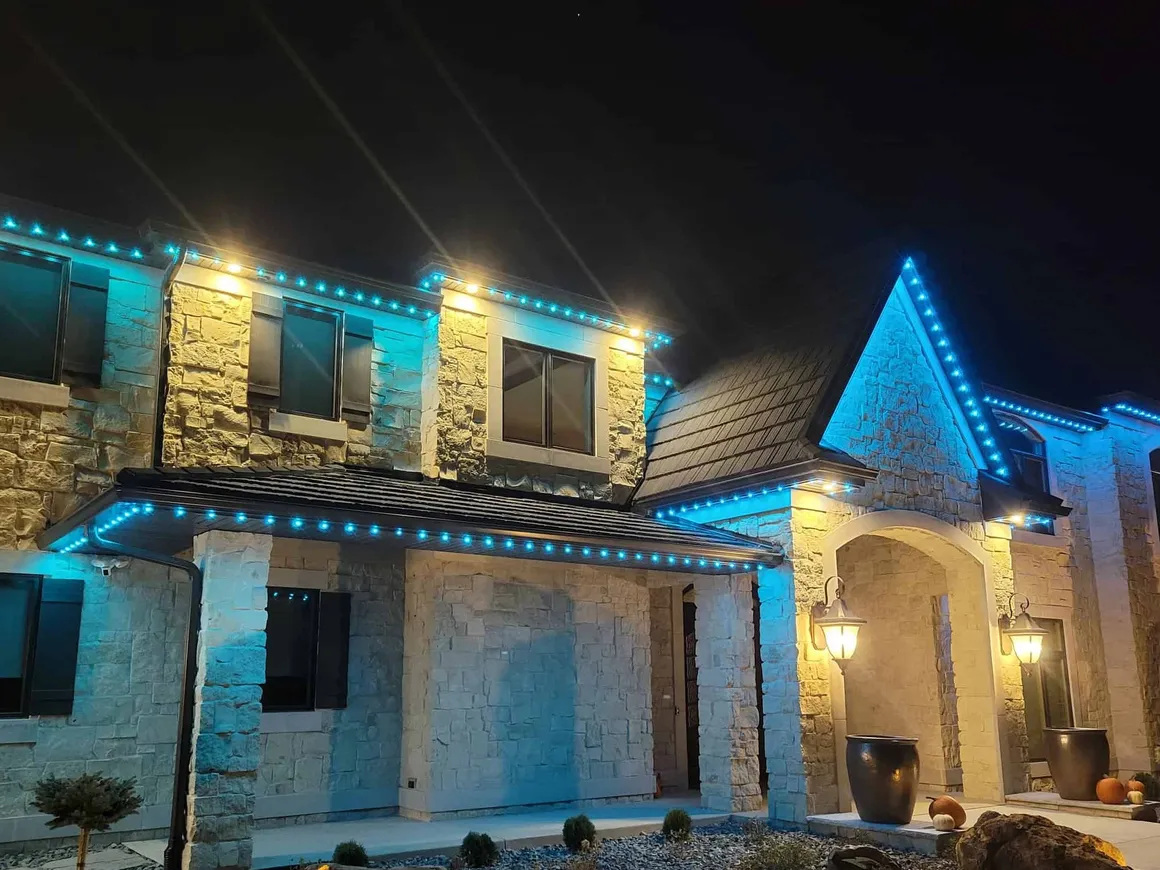
Denver sits in one of the most hail-prone corridors in the country, at a mile of elevation with stronger UV and wild temperature swings. That combination is hard on anything mounted to a roofline, which is why product choice matters more here than almost anywhere.
Hail season along the Front Range
Late spring and summer storms regularly hit Aurora, Parker, Castle Rock, and the northern suburbs. Exposed bulbs and clip-on strands take the worst of it.
Why channel-mounted systems hold up
Permanent lighting sits inside a low-profile aluminum channel under the eave, shielding diodes from direct impact.
What to check after a big storm
Run a quick color test from the app. If a section is out, call us — repairs are simple because the system is modular.
UV at 5,280 feet
Higher elevation means more intense sunlight. Cheap plastics yellow, crack, and fade within a few Denver summers. Ask any installer what the lens and channel are rated for.
Heavy spring snow and ice dams
March and April are often Denver's snowiest months. Wet snow slides off roofs and ice builds at gutters.
Mounting placement
We position the channel to avoid the path of sliding snow and gutter ice wherever the roofline allows.
Sealed connections
Every connection is sealed against melt water that refreezes overnight.
Freeze-thaw and 40-degree swings
A Denver day can start below freezing and hit 60°F by afternoon. Expansion and contraction loosen poor installs. Proper fastening and quality components prevent sagging and flicker.
Questions to ask any Denver installer
Is the product rated for Colorado conditions? What does the warranty cover, and for how long? Who handles repairs — a local crew or a national call center? We answer all three in writing on every proposal.